

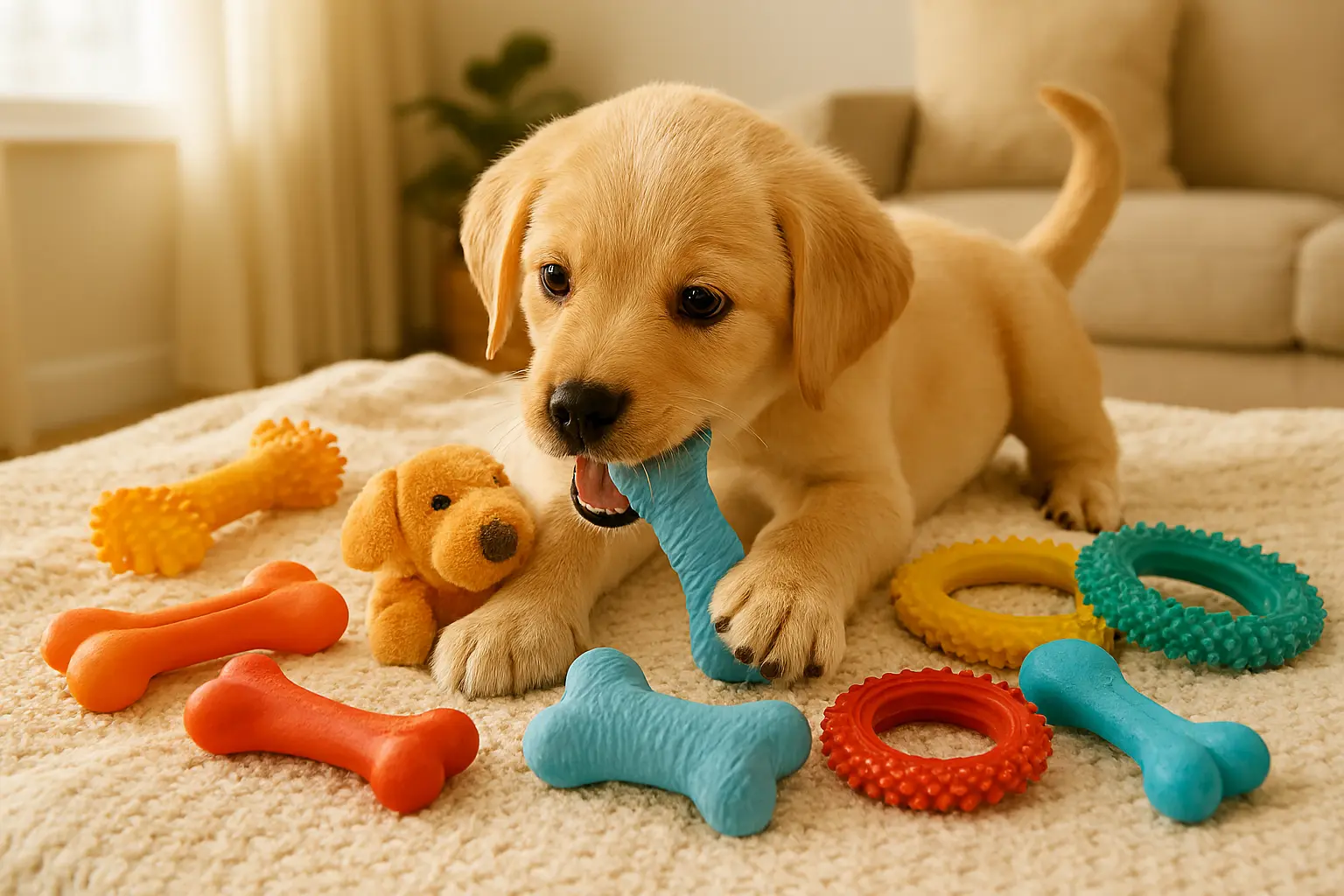
Why Your Puppy is Destroying Everything You Own
If you’ve ever come home to find your favorite shoes turned into confetti or discovered your coffee table leg has been “redesigned” by your new puppy, you’re not alone. That adorable ball of fur is going through one of the most challenging phases of puppyhood: teething.
Also you can check on This : Dog Toothpaste vs. Dental Wipes Which Is Better?
Just like human babies, puppies experience discomfort when their adult teeth push through their gums. This process typically starts around 3-4 months and can last until they’re about 7 months old. During this time, pet teething toys become your best friend and your furniture’s lifeline.
What Makes a Great Pet Teething Toy?
Not all toys are created equal when it comes to soothing those sore gums. Here’s what separates the heroes from the zeros:
Safety comes first. The toy should be the right size for your pet – large enough that they can’t swallow it whole, but small enough for them to comfortably hold and chew. Think of it like Goldilocks: not too big, not too small, but just right.
Texture matters more than you think. The best teething toys for pets offer different textures to massage those tender gums. Some puppies prefer softer rubber, while others need something firmer to really satisfy that urge to chew.
Durability is key. A toy that falls apart after one chewing session isn’t doing anyone any favors. Look for toys specifically designed to withstand determined puppy teeth.
The Science Behind Successful Pet Teething Toys
Veterinarians often recommend toys that provide gentle resistance when chewed. This resistance helps strengthen jaw muscles while providing the counter-pressure that feels good on inflamed gums. It’s similar to how we might massage a sore muscle – the pressure provides relief.
Frozen treats work wonders. Many pet teething toys can be frozen, providing extra numbing relief for particularly uncomfortable days. I learned this trick from my neighbor when her Lab puppy was going through a particularly rough teething phase. She’d freeze rope toys soaked in low-sodium chicken broth, and it was like magic – the puppy would settle down and chew contentedly for 20 minutes.
Types of Pet Teething Toys That Actually Work
Rope toys remain classics for good reason. They’re soft enough for tender gums but provide great texture variation. Plus, the frayed ends help clean teeth naturally as your pet chews.
Rubber toys with different textures offer versatility. Look for ones with raised nubs, ridges, or different firmness levels in various sections. These teething toys for pets can grow with your puppy as their comfort level changes.
Puzzle toys that dispense treats serve double duty. They satisfy the need to chew while keeping busy minds occupied. This is especially helpful for intelligent breeds that might otherwise channel their energy into destructive behaviors.
Natural chew alternatives like deer antlers or bully sticks can work well for some pets, but always supervise their use and choose appropriate sizes.
Recommendation for Your Puppies

Rope Toys
Puppy Teething Toys for Small Dogs, 5 Pack Cotton Puppy Dog Rope Toy for Small Dogs, Durable Dog Chew Toys for Aggressive Chewers Small Breed, Interactive Tug of War Puppy Toys to Keep Them Busy

Rubber Teething Toys
KIPRITII 25 Pack Various Puppy Dog Toys for Teething, Entertainment & Interaction, Puppy Chew Toys Pack with Rope Toy, Treat Balls and Dog Squeaky Toys for Puppies & Small Dogs

Puzzle toys that dispense treats
Interactive Dog Treat Puzzle Toys for IQ Training & Mental Stimulating,Fun Slow Feeder,Large Medium Small Dogs Enrichment Toys with Squeak Design

Natural chew alternatives
Sensory Chew Stick Toys (5 Pack) – Designed for ADHD, Autism, SPD, Oral Motor Stimulation, Special Needs – Extra Tough Sensory Oral Motor Chew Tool for Moderate Chewers (Standard – Moderate Chewer)
Red Flags: Pet Teething Toys to Avoid
Stay away from anything that can splinter, break into small pieces, or is too hard. Avoid these common mistakes:
Tennis balls might seem perfect, but the fuzzy coating can wear down teeth over time, and the rubber can be too soft for serious chewers. Rawhide poses choking hazards and digestive issues for many pets. Cooked bones can splinter and cause serious internal damage.
If you can’t press your fingernail into it, it’s probably too hard for your teething puppy.

Making Pet Teething Toys More Appealing
Sometimes even the best pet teething toys need a little help to compete with your expensive sneakers. Try rotating toys weekly to maintain novelty. Rub a small amount of peanut butter (xylitol-free) or cream cheese on new toys to make them irresistible.
Create positive associations. Give your pet the teething toy when they’re calm and happy, not just when they’re being destructive. This helps them see it as a reward rather than a substitution.
Timing Your Pet Teething Toy Strategy
Morning energy bursts are perfect for introducing new chewing options. Most pets have higher energy levels in the morning, making them more likely to engage with toys.
Evening wind-down sessions work well for softer, comfort-focused teething toys for pets. A frozen toy can be especially soothing before bedtime.
Redirect immediately when you catch your pet chewing something inappropriate. Don’t just say “no” – offer the teething toy as an alternative and praise them when they take it.
Measuring Success with Pet Teething Toys
You’ll know you’ve found the right combination when your pet seeks out their toys independently, chewing sessions last longer than a few minutes, and (most importantly) your belongings remain intact.
Keep track of which toys get the most use. This information helps when buying replacements or trying new options. Every pet has preferences, and what works for your neighbor’s dog might not work for yours.

When to Replace Pet Teething Toys
Safety checks should happen weekly. Look for loose pieces, sharp edges, or significant wear. A toy that’s falling apart can become a choking hazard.
Size changes matter. As your pet grows, their toy needs change too. What was the perfect size at 12 weeks might be too small (and dangerous) at 6 months.
Interest levels naturally fluctuate. Even the best pet teething toys can lose their appeal over time. Having a rotation system helps maintain engagement.
Creating a Complete Teething Strategy
Combine different types of toys for maximum effectiveness. Having both soft comfort options and firmer chewing challenges gives your pet choices based on their mood and comfort level.
Environment setup helps too. Keep inappropriate chewing targets out of reach while making approved teething toys for pets easily accessible. This sets your pet up for success rather than constantly testing their willpower.
The Long-Term Benefits of Good Pet Teething Toys
Investing in quality pet teething toys now pays dividends later. Pets who learn appropriate chewing habits during teething often maintain those good habits throughout their lives. It’s like teaching good table manners – easier to establish early than to correct later.
Dental health benefits extend far beyond the teething phase. Appropriate chewing helps keep teeth clean and gums healthy throughout your pet’s life.
Questions to Ask Yourself
What’s your pet’s current favorite texture – soft, medium, or firm? Are they more motivated by treats, textures, or interactive challenges? How much supervision time can you realistically provide for different types of toys?
Understanding your specific situation helps narrow down the overwhelming number of pet teething toys available in stores and online.

Your Next Steps
Start with one or two different types of teething toys for pets rather than buying everything at once. Observe what works and what doesn’t. Every pet is different, and finding the right combination takes some experimentation.
Remember that teething is temporary, but the habits your pet develops during this phase can last a lifetime. Patience and consistency with appropriate pet teething toys now will save you frustration and money in the long run.
What teething challenges are you currently facing with your pet? Have you found any particularly effective solutions that other pet parents might benefit from hearing about?